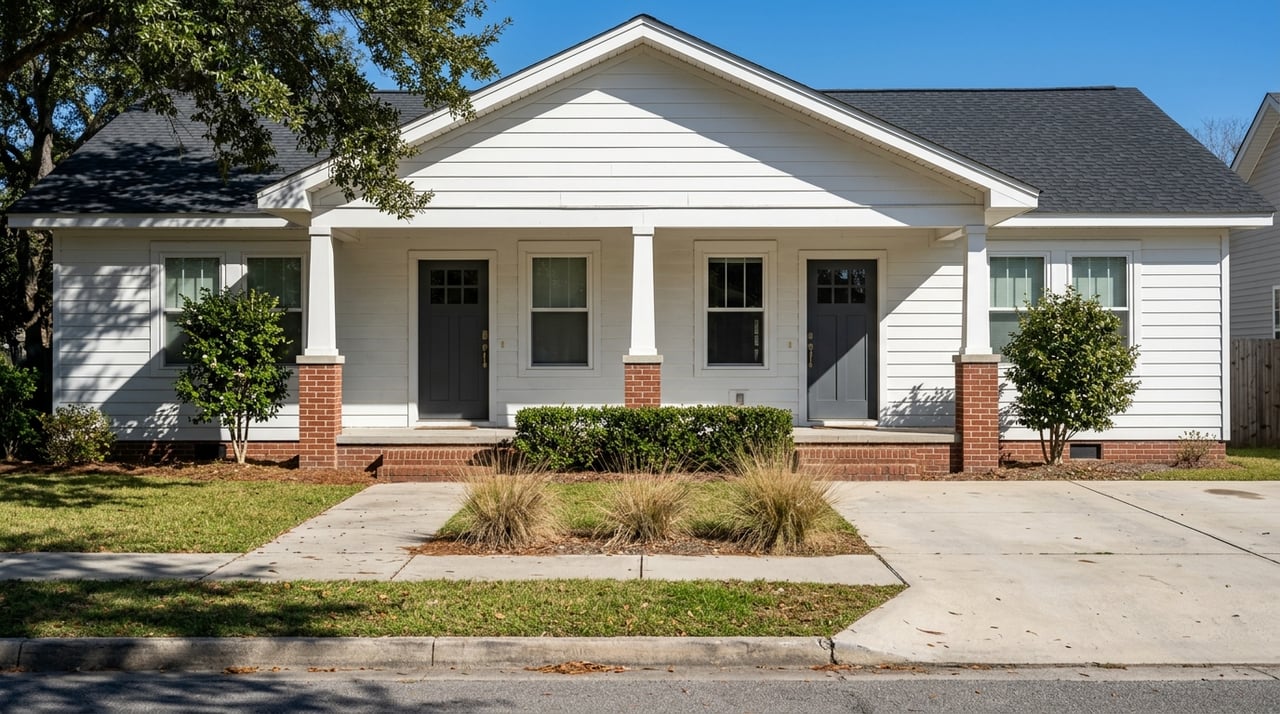
If you are looking at Coffee County investment properties, the numbers tell an interesting story. This is a lower-cost market with tight rental supply, modest household incomes, and a sales market that gives buyers room to negotiate. If you want to understand where the opportunities may be and where you need to be careful, this guide breaks down the latest rental market trends, pricing signals, and local demand drivers so you can make a more informed move. Let’s dive in.
Coffee County market snapshot
Coffee County had an estimated population of 43,851 in July 2024, with 15,349 households and a 64.7% owner-occupied rate. That owner-heavy mix matters because it suggests rentals make up a smaller slice of the overall housing market.
At the same time, new supply appears limited. QuickFacts reported 110 building permits in 2024, which is relatively modest for a county of this size and helps explain why available rentals can feel tight.
For investors, the bigger picture is important. Median household income was $50,683, and the poverty rate was 23.3%, which means affordability and property condition can have a major impact on leasing performance.
Rental market trends in Coffee County
The clearest sign of rental demand is low vacancy. Georgia DCA lists Coffee County’s rental vacancy rate at 3%, while homeowner vacancy is 1%, pointing to a market with limited rental slack.
Live listing data supports that picture. Realtor.com reported only 9 rentals countywide in March 2026, with a median monthly rental price of $1,225, and much of that inventory was concentrated in Douglas.
Current asking rents also show a wide spread depending on the property. Zillow listings show around $900 for a 2-bedroom, 1-bath unit, while larger 3-bedroom homes were asking roughly $1,900 to $2,000, suggesting a two-tier market split between more basic housing and better-kept or larger homes.
That spread is important if you are comparing rents. Census data shows a median gross rent of $710, but live market listings point to higher asking rents, and those two measures should not be treated as the same thing.
Why rent numbers can look different
One of the most common mistakes investors make is mixing census rent data with current listing rents. In Coffee County, the ACS median gross rent is $710, while current market listings and median asking rents are higher.
That does not mean one source is wrong. It means they measure different things. Census data reflects occupied units and broader historical conditions, while asking-rent data reflects what landlords are currently trying to achieve in the live market.
For that reason, Coffee County should be viewed as a market where rental demand exists, but rent growth still needs to be tested against local income levels and the quality of the property you own. A clean, well-managed property may compete in a different tier than an older home that needs updates.
Home values and sales conditions
On the ownership side, Zillow reported an average home value of $183,170 in Coffee County as of March 31, 2026, down 3.8% year over year. That softer pricing trend may create openings for investors who are focused on basis and long-term cash flow.
Realtor.com described Coffee County as a balanced market in March 2026. Homes were selling about 5.14% below asking price on average, with a median of 65 days on market.
For buyers, that usually means you may have room to negotiate, especially if a property needs work or has been sitting. For sellers of investment property, it means pricing and presentation matter if you want strong interest.
Yield signals for investors
A rough rent-to-value view can help frame the opportunity, even though it is not a substitute for full underwriting. Using the ACS median gross rent and Zillow’s average home value, the gross rent-to-value ratio comes out to about 4.7%.
Using current asking-rent data instead, that same rough measure is closer to 8.0%. That is a big difference, and it reinforces why live listing rents and census averages should be used carefully.
The practical takeaway is simple. Coffee County may offer promising cash-flow potential at the right purchase price, but your actual cap rate will depend on taxes, insurance, maintenance, vacancy, and management.
What property types stand out
Single-family rentals may appeal to investors who want a simpler entry point, especially near Douglas and key employer corridors. In a market like this, properties that are clean, functional, and priced right are often better positioned than homes that rely on aggressive future rent increases.
Small multifamily also deserves attention. Public listings in Douglas included a 48-unit apartment complex marketed at an 8% cap rate with reported occupancy between 97% and 100%, plus a waiting list.
Manufactured housing and RV-oriented assets have also shown up as higher-yield opportunities. A 165-unit mobile home and RV park was marketed at an 8.73% cap rate with expansion upside, though asking cap rates should always be treated as directional rather than guaranteed performance.
Commercial property in the area appears to offer a different profile. Public listings for office, retail, and net-leased assets showed cap rates in the roughly 6.0% to 6.35% range, with one office-retail plaza marketed at a 6.15% current cap and 8.0% pro forma cap.
Douglas drives much of the activity
If you are studying Coffee County as an investor, Douglas deserves special attention. It is the county seat and the main market hub, and current rental inventory appears to be centered there.
Douglas also benefits from transportation and utility infrastructure that supports local commerce. The area is served by City of Douglas Utilities, Georgia Power, Satilla REMC, and available natural gas, water, sewer, and competing telecom and fiber providers.
Regional access is another plus. Coffee County sits between I-75, I-95, I-16, and I-10, with access through U.S. 221, U.S. 441, U.S. 82, and state routes 32 and 158.
Local demand drivers to watch
Rental demand is easier to understand when you know what supports local employment. According to the Douglas-Coffee County EDA, major employers include Pilgrim’s Pride, Walmart Distribution, Coffee Regional Medical Center, PCC Airfoils, Coffee Correctional Facility, Southwire, Fleetwood Homes, and several other industrial, health care, and logistics-related employers.
That mix matters because it points to a diverse local economy rather than a one-employer story. In many smaller markets, that kind of employer base can help support steady housing demand across different price points.
The city also highlights assets such as Douglas Municipal Gene Chambers Airport, South Georgia State College, Wiregrass Georgia Technical College, and Coffee Regional Medical Center. Together, those institutions help reinforce Douglas as the county’s central activity node.
A realistic investment strategy for Coffee County
Coffee County does not look like a market built on fast appreciation or sharp rent spikes. The public data points more toward a smaller, affordability-sensitive market where operations, purchase price, and occupancy discipline matter most.
That can still be attractive if your strategy is grounded in realistic assumptions. In this kind of environment, it often makes more sense to focus on steady cash flow, practical improvements, and reliable tenant demand rather than betting on aggressive rent growth.
A conservative approach may include:
- Buying at a basis that leaves room for repairs and holding costs
- Prioritizing properties near Douglas and major employer routes
- Stress-testing rent assumptions against local income levels
- Paying close attention to property condition and ongoing maintenance
- Treating asking cap rates and asking rents as starting points, not guarantees
What buyers and sellers should keep in mind
If you are buying an investment property in Coffee County, this market may reward patience and local knowledge. Thin inventory, low rental vacancy, and modest home values can create opportunities, but only if the numbers still work after real expenses.
If you are selling a rental, multifamily asset, or commercial property, buyers are likely to look closely at occupancy, condition, and income history. In a balanced sales market, clear pricing and strong property information can make a real difference.
This is also a place where on-the-ground guidance matters. A local team that understands Southeast Georgia property types, negotiation patterns, and investor expectations can help you spot both the upside and the hidden risks.
If you are weighing a purchase, sale, or 1031-minded repositioning in Coffee County, working with a team that understands homes, land, and select investment property across Southeast Georgia can help you move with more confidence. Connect with Jody Dupont for practical, local guidance tailored to your goals.
FAQs
What are Coffee County rental market trends right now?
- Coffee County appears to have tight rental supply, with a 3% rental vacancy rate reported by Georgia DCA and only 9 rentals listed countywide on Realtor.com in March 2026.
What is the average rent in Coffee County, GA?
- The ACS median gross rent is $710, while Realtor.com reported a median monthly rental price of $1,225 in March 2026, and current asking rents vary by property type and condition.
Are Coffee County investment properties good for cash flow?
- They can be, especially when bought at the right price, but results depend on your actual expenses, vacancy, maintenance, and how realistic your rent assumptions are.
Is Douglas, GA the main place to invest in Coffee County?
- Douglas appears to be the county’s main market hub and carries much of the active rental inventory, making it an important area for investors to watch.
What types of investment properties stand out in Coffee County?
- Public market signals suggest potential in single-family rentals, small multifamily, and some mobile home or RV park assets, with each requiring careful underwriting.
Is Coffee County a fast-appreciation market?
- Current public data suggests a more affordability-sensitive market where steady cash flow, occupancy, and management may matter more than rapid appreciation alone.