Thinking about buying your first home in a rural area can feel exciting and a little intimidating at the same time. If Brantley County is on your radar, you are probably drawn to more space, a slower pace, and the kind of property options that look different from a typical in-town market. The good news is that with the right local guidance, you can avoid common surprises and make a confident plan. Let’s dive in.
Why Brantley County Stands Out
Brantley County offers a distinctly rural setting in Southeast Georgia. Census QuickFacts estimates the county had 18,795 residents in 2024, with about 40.7 people per square mile, which points to a low-density market where land, privacy, and owner-occupied homes play a big role.
That rural character also shows up in the housing profile. The owner-occupied housing rate is 79.9%, the median owner-occupied home value is $99,600, and median monthly owner costs are listed at $1,087 with a mortgage and $423 without a mortgage. For many first-time buyers, those numbers make Brantley County worth a closer look.
Daily life here can also feel different from more built-up markets. The mean commute time is 30.5 minutes, so it helps to think about drive times, road access, and how often you will need to travel for work, errands, or appointments.
What First-Time Rural Buyers Should Expect
Buying in a rural county is not just about the house itself. You may also need to evaluate land, utility systems, access roads, flood-zone status, and financing rules that do not always come up in a more typical suburban purchase.
That does not mean the process has to be overwhelming. It simply means your due diligence should start earlier, especially if you are looking at acreage, homes near water, or properties outside more developed areas.
At DuPont Real Estate Team, this is where local, hands-on support matters. When you are comparing homes, lots, and road access in Southeast Georgia, practical experience can help you spot issues before they turn into delays.
Financing Options for Rural First-Time Buyers
USDA loans in Brantley County
For many first-time buyers, the USDA Section 502 Guaranteed Loan program is one of the most relevant financing options to explore. USDA says the program can support the purchase, construction, rehabilitation, improvement, or relocation of a home in an eligible rural area.
One reason buyers pay attention to this program is that it can offer 100% financing. USDA also describes it as a 30-year fixed-rate mortgage program and notes there is no required credit score set by USDA itself, although lenders may apply their own standards.
Eligibility is not automatic for every home or buyer. USDA says applicants generally must meet income limits, use the home as a primary residence, and buy a property in an eligible rural area. The property lookup is address-specific, and final property eligibility is determined by Rural Development after a complete application.
Georgia Dream assistance
The Georgia Dream Homeownership Program may also be worth a look if you are trying to bridge the gap on upfront costs. According to the Georgia Department of Community Affairs, the program offers affordable mortgage financing, down payment assistance, and homebuyer education through participating lenders.
Georgia Dream can be paired with FHA, VA, USDA-RD, or conventional uninsured loans for eligible buyers. Current program rules include a minimum middle credit score of 640, liquid asset limits, and HUD-approved homebuyer counseling.
The down payment help is structured as a 0% interest second mortgage. DCA says it becomes due when the home is sold, refinanced, or no longer used as your primary residence. That makes it important to understand both the short-term benefit and the long-term terms before you move forward.
Utilities Matter More in Rural Purchases
Check water source early
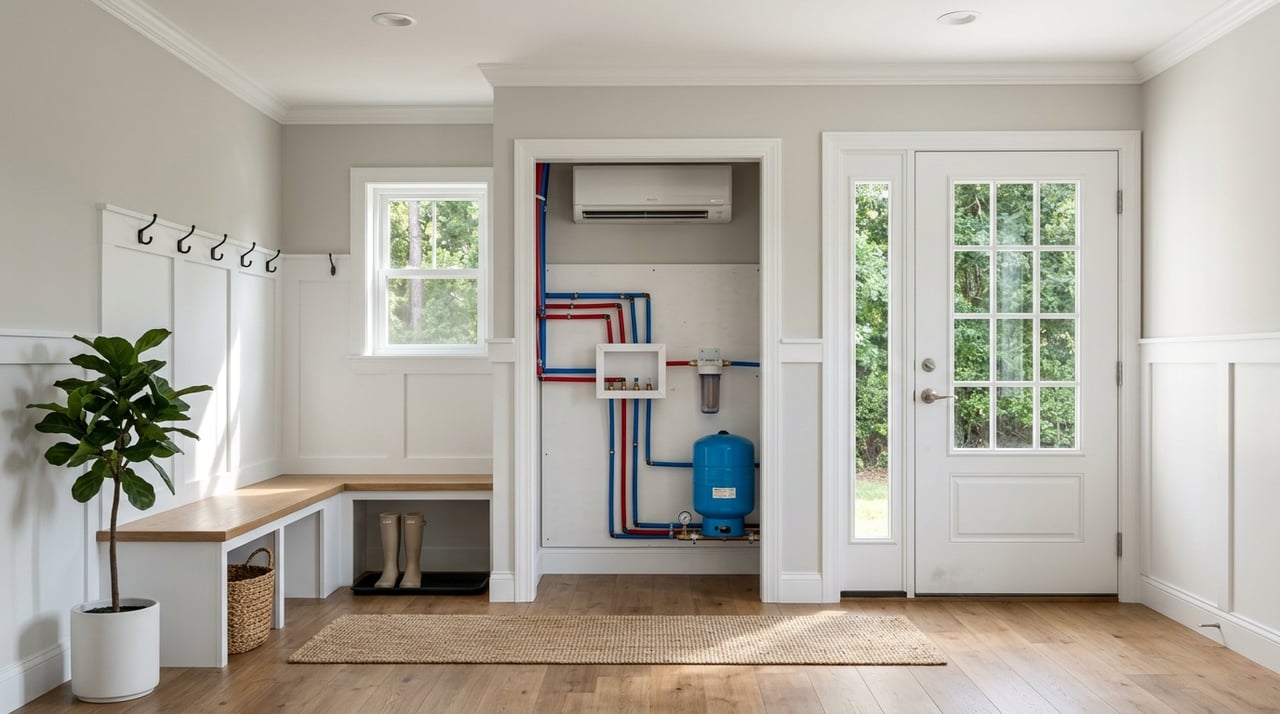
In Brantley County, not every property will connect to public utilities. The county directory includes separate septic tank permit and water permit forms, which is a practical reminder to verify how water and wastewater service work for any property you are considering.
This matters for financing and for your future maintenance costs. USDA notes that public water and wastewater systems are generally presumed to meet standards without extra documentation, while private wells and wastewater systems may require inspections or additional documentation.
If a home uses a private well, Georgia Department of Public Health guidance is especially helpful. Georgia DPH regulates private wells and onsite sewage, recommends annual bacterial testing and a chemical screen every three years, and sets rules about well placement, including setbacks from septic components.
Understand septic systems
If the property is not on public sewer, you will want to understand the septic setup before you close. A septic inspection, permit history, and confirmation of the system location can help you avoid costly surprises later.
This is one of those details that can be easy to overlook when you are focused on bedrooms, square footage, or acreage. In a rural market, though, the utility setup is part of the property’s value and day-to-day usability.
Road Access Can Affect Financing and Value
A long driveway or a tucked-away homesite may sound ideal, but access needs a close look. Brantley County maintains a Road Department, and for buyers, one of the biggest practical questions is whether the road is public, private, or shared.
USDA requires a property to have direct access from a public or private street, road, or driveway. If the driveway is shared, USDA says a permanently recorded easement is required.
That means access is not just a convenience issue. It can affect financing, title review, and future resale. Before you fall in love with a rural property, make sure you know who maintains the road and what legal access is recorded.
Flood Zones and Water Proximity
Brantley County has a strong connection to water and outdoor recreation. The Satilla River runs about 50 miles through the county, the Little Satilla runs about 12 miles, and the county highlights public boat ramps and the Satilla River Water Trail.
That setting can be a major draw if you enjoy boating, fishing, or just being near natural scenery. It also means buyers should check flood-zone status early, especially for homes or land near rivers, creeks, or low-lying areas.
FEMA says homes in high-risk flood areas with government-backed mortgages must carry flood insurance, and FEMA flood maps are the official source for flood-hazard designations. In practical terms, that means flood-zone questions should come up before you get too far into financing and insurance quotes.
Why Rural Appraisals Can Be Tricky
First-time buyers are often surprised to learn that appraisals can be more complicated in rural areas. The challenge is simple: there may be fewer recent comparable sales nearby.
FHFA found that in its 2013 to 2021 sample, less than 61% of rural appraisals included five or more comparable properties, compared with about 75% in high-density urban areas. USDA also notes that appraisers in remote rural areas may need to use alternative methods if the standard sales-comparison approach is not credible.
If you are buying a unique home, a property with acreage, or a parcel that does not match many recent sales, the appraisal process may take extra care. That can influence value discussions, financing timelines, and negotiations with the seller.
Property Taxes and Ongoing Costs
Your monthly payment is only part of the picture. In Brantley County, property tax is based on fair market value as of January 1, with assessments set at 40% of fair market value and the millage rate helping determine the final tax bill.
The county also notes a few deadlines buyers should know. Tax returns are filed between January 1 and April 1, assessment appeals must be filed within 45 days of notice, and homestead exemption applications for the current year must be filed by April 1.
If you plan to live in the home as your primary residence, homestead exemption may help reduce your tax burden. It is one of those small but important steps that new homeowners should put on their post-closing checklist.
Buying acreage? Ask about assessment programs
If you are considering a larger parcel, carrying costs may look different depending on the land’s use and eligibility. Brantley County lists preferential agricultural and conservation-use assessment programs through the assessor’s office.
The county says bona fide agricultural property may be assessed at 30% of fair market value instead of 40% if it meets program requirements and covenant terms. For buyers looking at hobby-farm or larger rural properties, that can be an important question to ask early.
A Simple First-Time Buyer Checklist
Before you make an offer in Brantley County, try to confirm these basics:
- Your financing options, including whether USDA or Georgia Dream may fit your situation
- Whether the property uses public utilities or private well and septic systems
- Flood-zone status and possible flood insurance requirements
- Road frontage, driveway access, and any recorded easements
- Estimated property taxes and whether homestead exemption may apply
- Whether acreage may qualify for agricultural or conservation-use assessment
- How the property compares with recent local sales if appraisal support may be limited
Local Guidance Makes a Difference
A rural home purchase often includes more moving parts than buyers expect at first. That is why having a responsive, local team matters, especially when you are comparing homes with acreage, private systems, or less straightforward access.
DuPont Real Estate Team brings the kind of Southeast Georgia market knowledge that can help you ask better questions from the start. Whether you are looking for your first home, a place with room to spread out, or a property that fits an outdoor lifestyle, clear guidance can make the process feel much more manageable.
If you are thinking about buying your first home in Brantley County, Jody Dupont can help you navigate the details and move forward with confidence.
FAQs
What makes Brantley County attractive for first-time rural homebuyers?
- Brantley County offers a low-density, owner-occupied market with space, rural character, and housing costs that may appeal to first-time buyers looking for more land and a different pace of life.
What financing programs may help first-time buyers in Brantley County?
- USDA Section 502 Guaranteed Loans and the Georgia Dream Homeownership Program are two options mentioned in the research, and each has specific eligibility, property, and counseling requirements.
Why should Brantley County buyers check well and septic details?
- Some rural properties may use private well and septic systems instead of public utilities, which can affect inspections, documentation, maintenance, and financing.
Why does road access matter when buying rural property in Brantley County?
- Road access can affect financing and legal use because buyers should confirm whether access is public, private, or shared, and whether any needed easements are permanently recorded.
Do homes near rivers in Brantley County need flood insurance?
- Properties in high-risk flood areas with government-backed mortgages must carry flood insurance, so buyers should check FEMA flood-zone status early when a home is near water.
Are appraisals harder on rural homes in Brantley County?
- They can be, because rural areas often have fewer comparable sales, which may make valuation more complex for unique homes or acreage properties.